
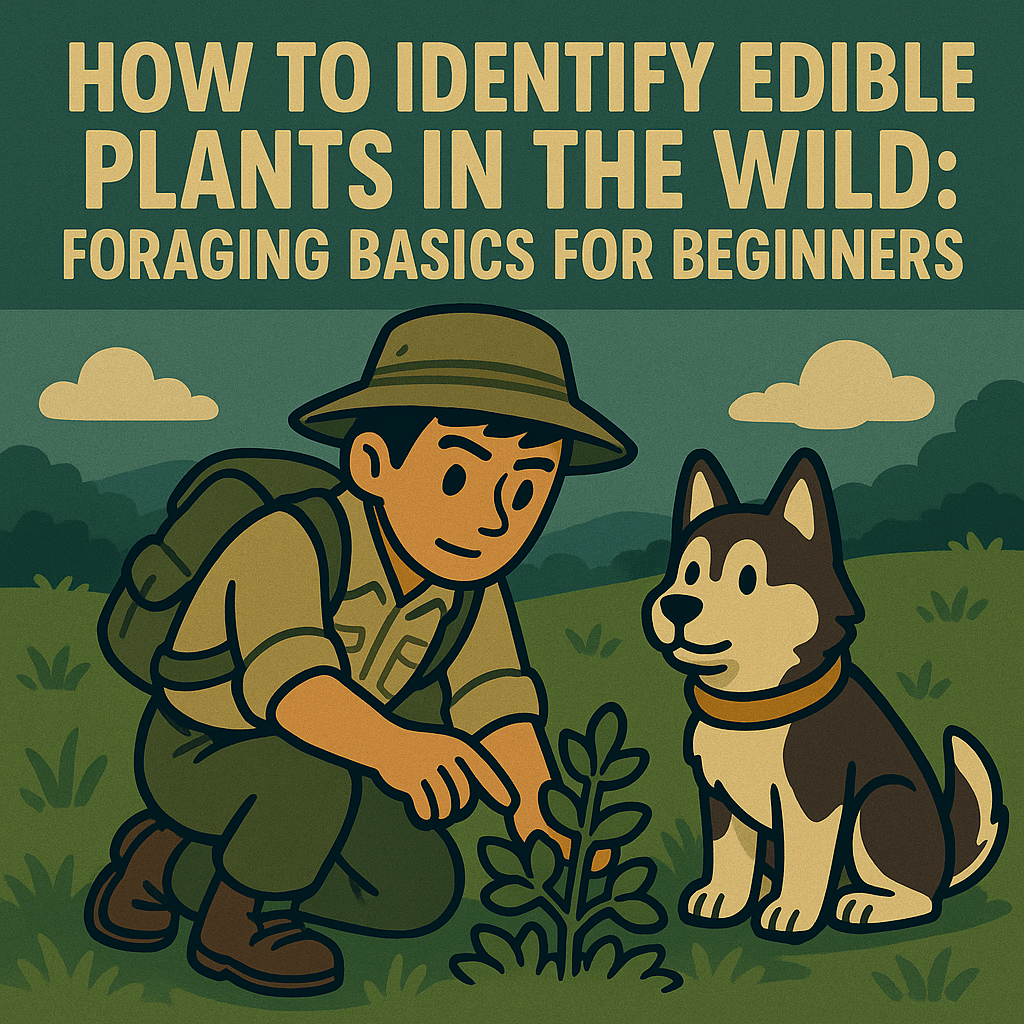
A peaceful hike can quickly turn into a survival situation. What if you get lost, your food runs out, and there’s no help in sight? Panic sets in, and hunger clouds your judgment. But imagine having the knowledge to spot edible plants in the wild — turning nature into your emergency pantry. This guide will teach you the basics of identifying safe, edible wild plants, giving you the confidence to forage in the wilderness and stay nourished when it matters most.
- ✅ Why Foraging Knowledge Matters
- ✅ Foraging Basics for Beginners
- ✅ Common Edible Wild Plants
- ✅ Avoiding Toxic Look-Alikes
✅ Why Foraging Knowledge Matters
In a crisis, access to food can be cut off without warning. Knowing how to identify edible plants in the wild provides a critical survival edge. This skill is not just for bushcrafters or preppers—it’s practical knowledge for anyone who hikes, camps, or wants to be more self-reliant. Foraging supports both short-term sustenance and long-term survival strategies, especially in areas where other food sources are limited or inaccessible. It also deepens your connection to the natural world and enhances environmental awareness.
✅ Foraging Basics for Beginners
Before eating anything from nature, follow the golden rule: never eat a plant unless you’re 100% sure it’s safe. Start with common and easily identifiable plants. Learn to observe leaf shapes, flower types, stem textures, and growth patterns. A good field guide is your best friend. Look for plants in areas away from pollution or pesticides, and always test new plants in small quantities to monitor any adverse reactions. Key tools include gloves, a knife, and breathable collection bags. Practice foraging in your local region first before heading into unfamiliar territory.

✅ Common Edible Wild Plants
Some widely available edible plants include:
- Dandelion: Entire plant is edible. Leaves for salad, roots for tea.
- Plantain (Plantago): Not the banana! Used for wound healing and can be eaten raw.
- Chickweed: Tastes like corn and rich in vitamins. Great raw or cooked.
- Wood Sorrel: Tangy flavor, often mistaken for clover. Excellent in salads.
- Wild Garlic: Smells like onion. Leaves and bulbs are edible and pungent.
These plants are great for beginners because they’re easy to recognize and have minimal toxic look-alikes. Study photos and harvest ethically: never take more than 30% from any one patch.
✅ Avoiding Toxic Look-Alikes
Mistaking a poisonous plant for an edible one can be fatal. Always cross-reference with multiple sources before consuming. Some common dangers include:
- Hemlock vs. Wild Carrot: Hemlock is deadly; learn the differences in smell and stem patterns.
- False Garlic vs. Wild Onion: Real ones smell like onion; false ones don’t—trust your nose.
- Nightshade Berries vs. Edible Berries: Color and leaf pattern differences are crucial.
Use your senses. If it smells bad or causes a skin reaction, don’t risk it. When in doubt, leave it out.
Mastering wild plant identification could be one of the most empowering skills you develop. It’s not just about survival—it’s about independence, resilience, and connecting with nature. Whether you’re planning a backcountry trip or preparing for unforeseen disasters, understanding how to identify edible plants gives you real power. Start with simple, safe plants and grow your knowledge step by step. The wilderness can provide if you know what to look for.
✅ Frequently Asked Questions
Q1. How can I safely test a wild plant before eating it?
A1. Perform a universal edibility test: separate parts, rub on skin, taste small amounts, and wait hours before full consumption.
Q2. Are there mobile apps to help identify edible plants?
A2. Yes, apps like “PlantNet,” “Seek by iNaturalist,” and “PictureThis” are great companions for beginners.
Q3. Can I forage plants anywhere?
A3. No. Foraging laws vary by country and region. Always check local regulations and avoid protected areas or private land.
For more survival tips, check out: